Rapid Response When Weather Brings Trees Down
Emergency Tree Services and Storm Damage Cleanup in Rockford for properties with fallen trees blocking access or threatening structures
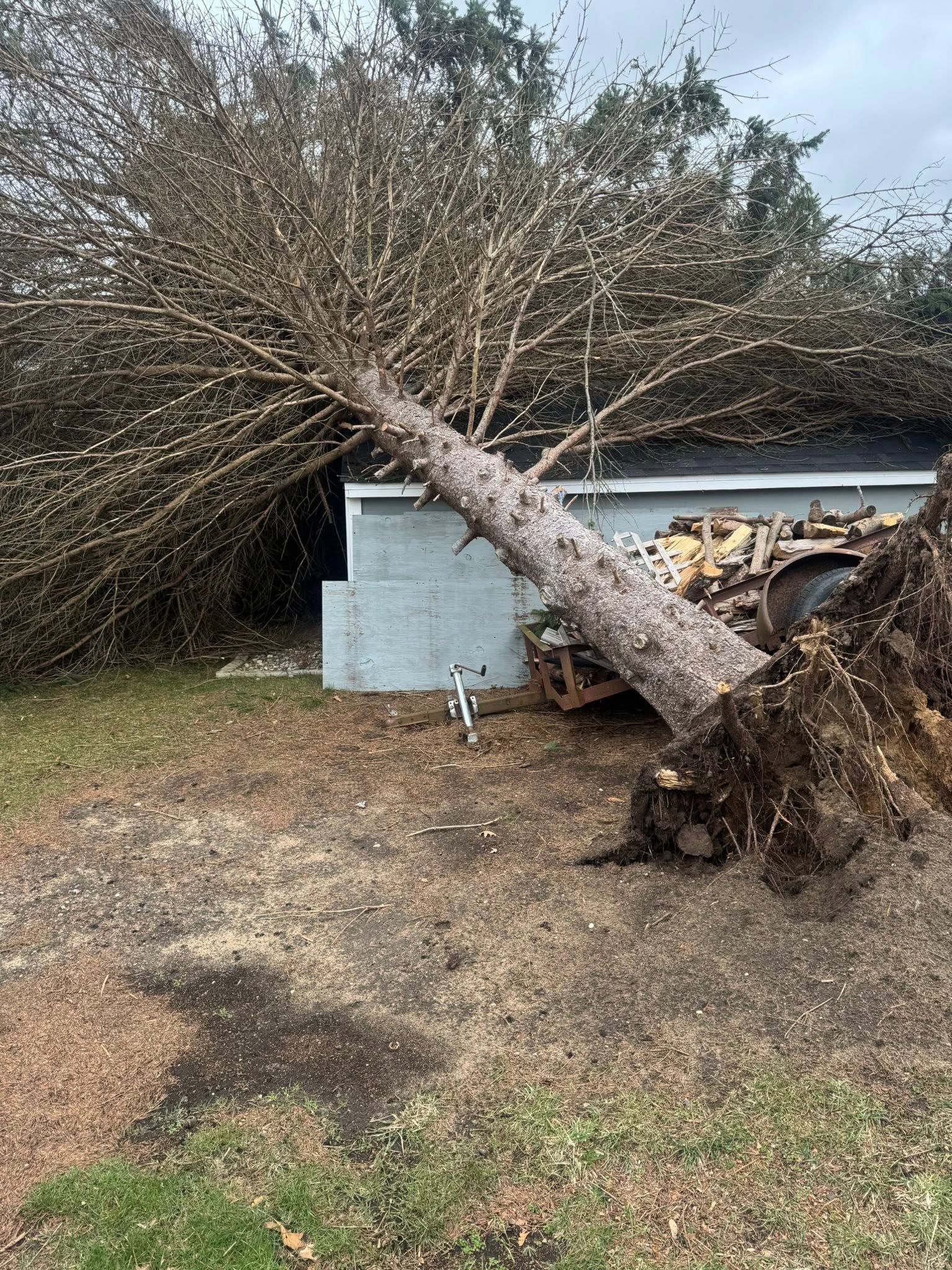
Severe weather in Michigan—high winds, ice accumulation, and saturated soil from heavy rain—often brings down trees without warning, blocking driveways, damaging roofs, or landing on vehicles and fences. When a tree falls across your access point or rests against your home, waiting for regular business hours isn't practical. K&F Solutions provides emergency response for Rockford properties facing immediate hazards, clearing fallen trees, removing broken limbs, and securing sites to prevent additional damage until permanent repairs can be arranged.
Emergency work prioritizes safety and access—cutting through trunks to open driveways, removing limbs from rooflines, and clearing debris that blocks entry points. The goal is to stabilize the situation quickly, whether that means tarping exposed roof areas after a branch puncture or removing a leaning tree before it completes its fall onto a structure.
Call for immediate emergency service if storm damage has created a hazardous condition on your property.
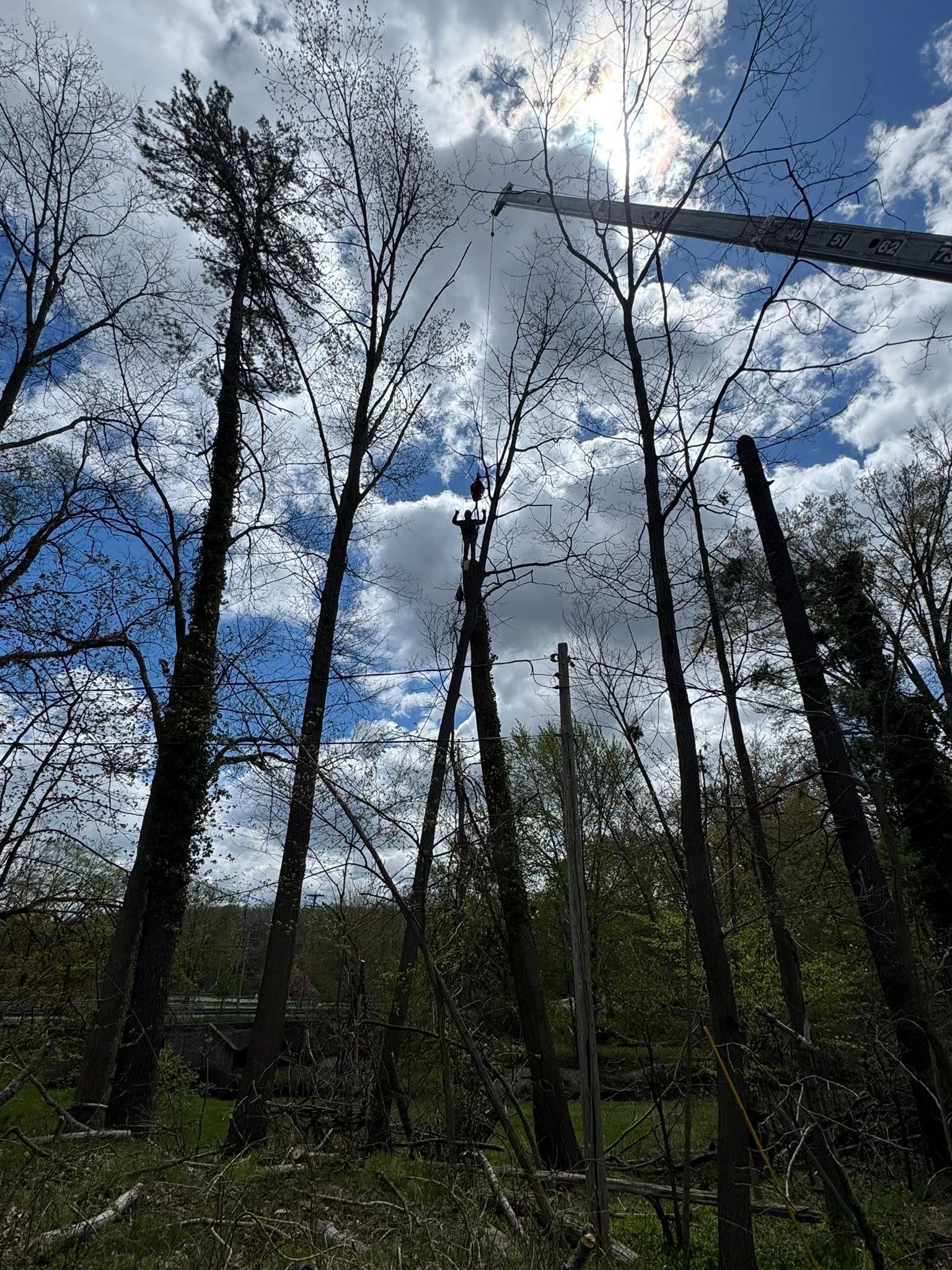
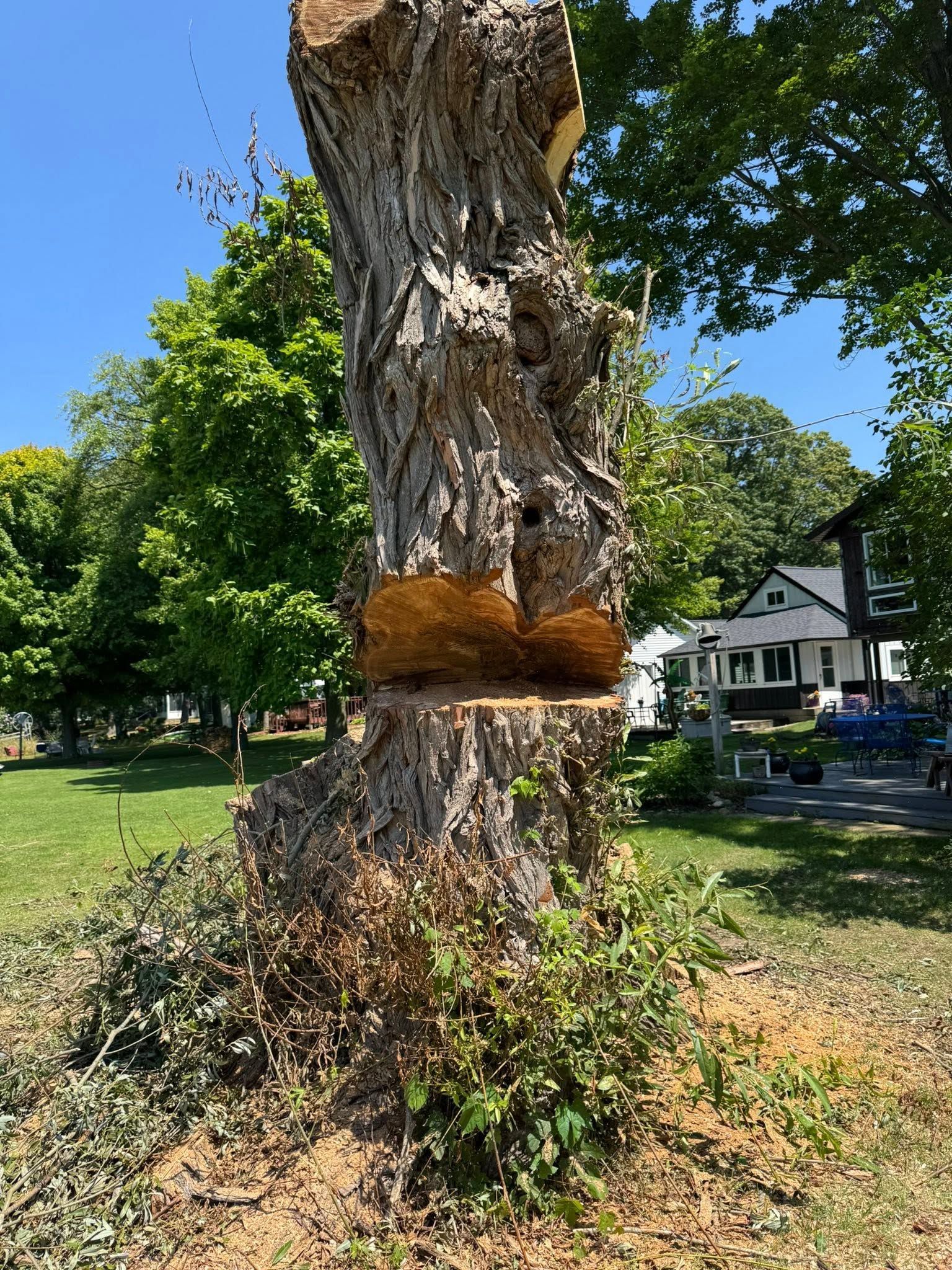
Response begins with assessing the hazard—whether the tree is still under tension, if power lines are involved, or if structures are at risk of additional damage. Chainsaws and rigging are used to section the tree safely, relieving pressure and removing weight from roofs or vehicles before cutting through the trunk. Debris is cleared from critical areas first, with full cleanup scheduled once the immediate danger is resolved.
After emergency removal, you'll notice the driveway is passable, the structure is no longer under load from the tree, and any remaining hazards are flagged or secured. Temporary measures like tarping or bracing may be in place until permanent repairs happen. The property is safe to occupy again, though full restoration—stump grinding, roof repair, fence replacement—typically follows in the days after the initial response.
Emergency services are available for residential and commercial properties, and response time depends on call volume during widespread storm events when multiple properties are affected simultaneously. Ice storms and summer wind events often create concentrated demand across Rockford and neighboring communities.
Questions Before Starting Your Project
Homeowners and business owners dealing with storm damage often ask about response times, insurance documentation, and what steps to take while waiting for help to arrive.
What should I do if a tree falls on my house during a storm?
Stay clear of the affected area, shut off power to that section of the home if possible, and call for emergency removal—do not attempt to cut or move the tree yourself if it's under tension or touching power lines.
How quickly can emergency tree services respond?
Response time depends on the severity of the storm and how many properties are affected, though life-safety situations like trees blocking exits or threatening collapse are prioritized over less urgent damage.
What documentation is provided for insurance claims?
Photos of the damage, detailed invoices, and descriptions of the work performed are standard, and some insurers require estimates before authorizing emergency work, so contacting your provider early helps streamline approval.
Why do trees fail during Michigan storms even if they looked healthy?
Shallow root systems in clay soils lose their grip when saturated, and trees with full summer canopies catch more wind, creating leverage that snaps trunks or pulls roots from the ground during severe weather.
What happens to the debris after emergency removal?
Initial work focuses on clearing access and securing the site, with full debris removal and stump grinding scheduled as follow-up services once the emergency phase is complete.
K&F Solutions handles emergency tree situations across Rockford and surrounding areas, with crews available to respond when storm damage creates immediate hazards on your property. Contact us for rapid response and follow-up cleanup to restore safety and access after severe weather events.