Complete Clearing for Sites Under Development
Stump Removal in Newaygo for properties requiring full excavation of root systems before construction
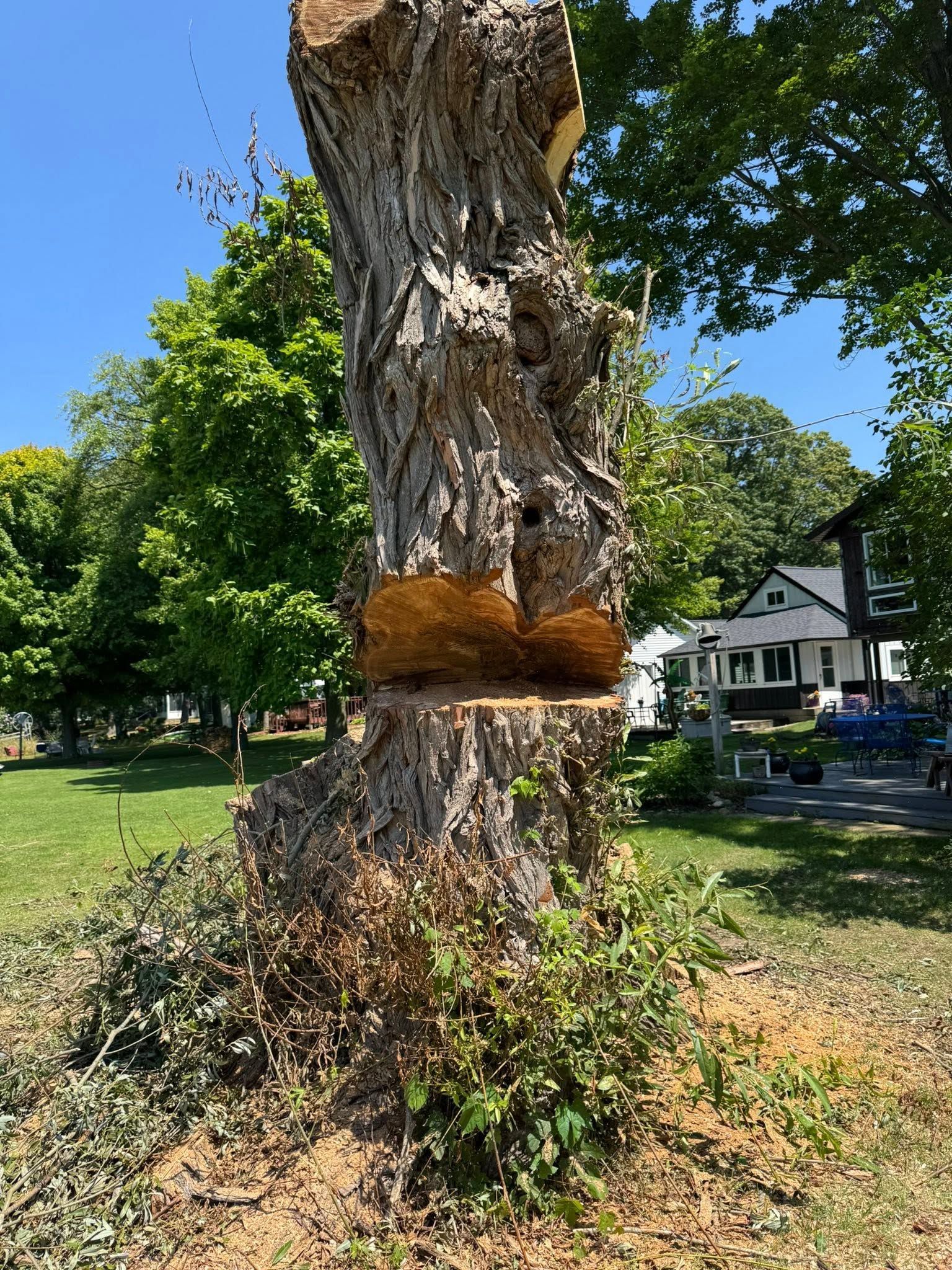
When construction, drainage work, or deep planting requires the entire root structure removed rather than ground down, full extraction becomes necessary. K&F Solutions pulls stumps and root balls from properties in Newaygo using excavation equipment designed to access the underground mass without leaving remnants that interfere with footings, utilities, or grading. The result is a void where the stump once sat, which can be backfilled with clean soil and compacted to match the surrounding grade.
Removal involves digging around the stump to expose the major roots, cutting through the anchor points, and lifting the entire structure from the ground. This method is common on sites where basements, septic systems, or retaining walls will be installed, since buried wood can cause settling or obstruct excavation. The process leaves a larger hole than grinding but clears all organic material that could decompose and shift over time.
Arrange an on-site consultation to evaluate root spread and soil conditions before scheduling removal.
Professional removal equipment exposes the root ball by digging a trench around the perimeter, then applies upward force to break the stump free from the remaining root network. Large taproots and lateral roots are cut as the extraction progresses, and the entire mass is lifted out once the major connections are severed. Smaller roots that extend beyond the excavation zone are trimmed flush with the hole walls.
Once the stump is out, you'll see a crater that extends below the original ground level, often several feet deep depending on the tree species and root architecture. The hole is typically backfilled with soil and tamped in layers to prevent future settling, though some sites require engineered fill if the area will support a structure or paved surface. The excavation process is more invasive than grinding and requires equipment access and staging space.
Removal is often specified by engineers or contractors when site plans show improvements directly over the old stump location. It's also useful for clearing multiple stumps during land development, where grinding would leave root masses that interfere with grading or utility trenching. The service is available for individual stumps or larger site clearing projects.
Answers to Frequent Service Questions
Property owners and contractors in Newaygo typically ask about the difference between removal and grinding, and when full extraction is required.
How does stump removal differ from grinding?
Removal excavates the entire root ball and leaves a void that must be backfilled, while grinding reduces the stump to chips and leaves the root structure underground to decompose.
When is complete removal necessary instead of grinding?
Building projects that require deep footings, underground utilities, or compacted fill typically specify removal to prevent settling caused by decomposing wood beneath the structure.
What size hole does removal create?
The excavation diameter is usually two to three times the stump diameter, and depth depends on the root ball size, which varies by species—shallow-rooted trees like maples create wider, shallower holes than taprooted oaks.
Why do contractors sometimes require stumps to be pulled rather than ground?
Grinding leaves the root mass in place, which can obstruct trenching, prevent proper soil compaction, or interfere with foundation work, making full removal the only compliant option.
What happens to the stump and roots after extraction?
The material is hauled off-site unless you want to repurpose the wood, and the hole is backfilled with soil that you provide or that we bring in depending on project scope.
K&F Solutions coordinates stump removal with construction schedules and site preparation timelines across Newaygo and nearby communities. Request a free estimate to assess equipment access and backfill requirements for your property.