Stumps Removed Without Tearing Up Your Yard
Stump Grinding in Howard City for properties with remnants left behind after tree work
K&F Solutions grinds stumps below ground level across Howard City and surrounding Michigan communities, turning visible remnants into wood chips while leaving the surrounding lawn intact. The grinding process uses a specialized machine that chews through the stump incrementally, working downward to several inches below the soil surface where grass can grow over the area. This service is especially useful for homeowners who need to mow without steering around obstacles or who want to reclaim yard space for gardens, patios, or new plantings.
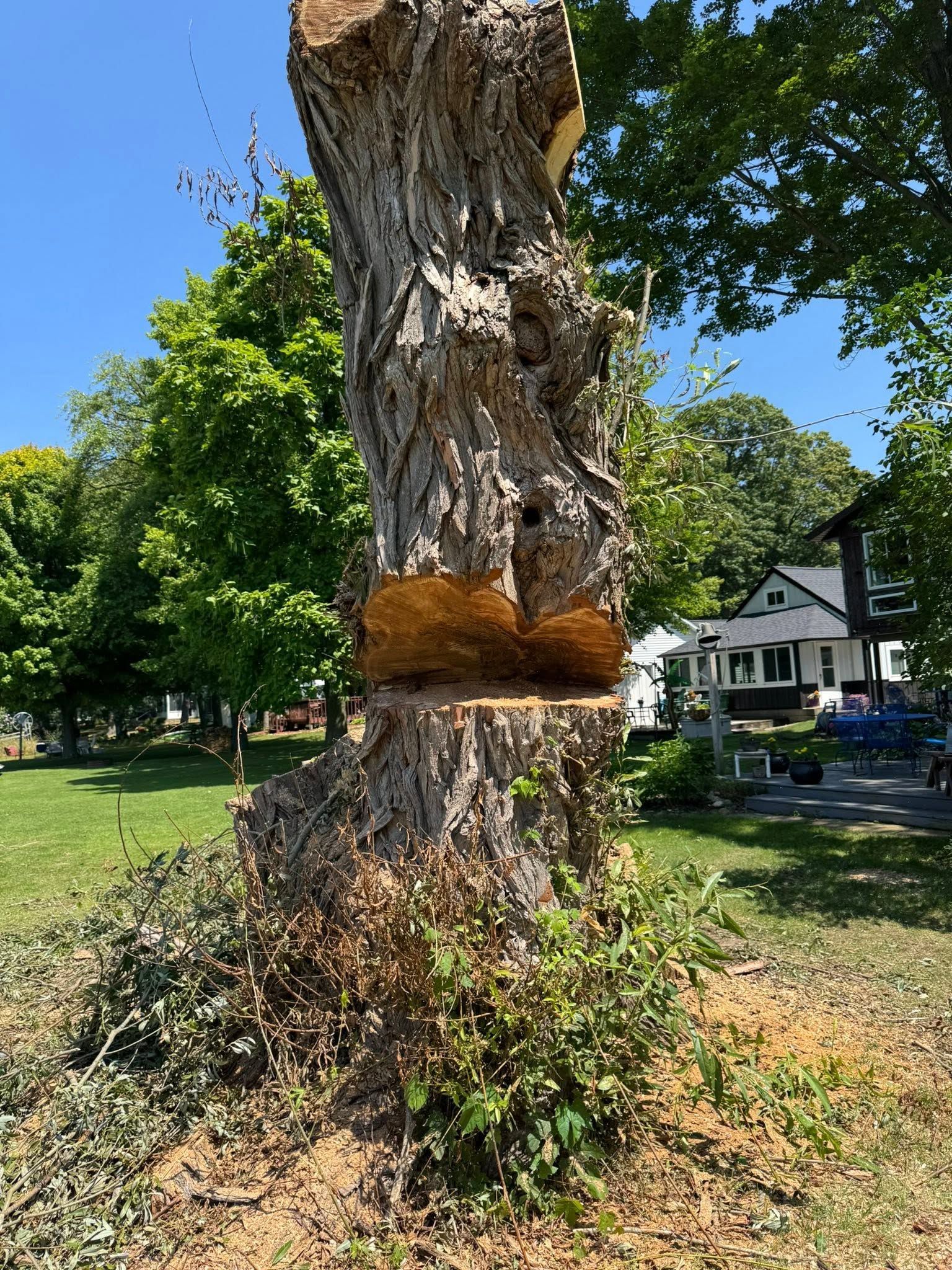
Grinding removes the visible portion of the stump and extends several inches into the root crown, which prevents most species from resprouting and eliminates the trip hazard that protrudes above grade. The process produces wood chips that can be removed or left on-site as mulch, depending on your landscaping plans. In Michigan, where freeze-thaw cycles can shift stumps and create uneven surfaces over time, grinding offers a more stable long-term solution than leaving the wood in place.
Schedule a property evaluation to determine the depth and equipment needed for your specific stump situation.
The grinder's rotating cutting wheel reduces the stump to chips in layers, working from the outer edge toward the center and then down into the root ball. Depth is adjusted based on whether you plan to plant grass, install hardscaping, or prepare the site for construction. Most residential grinds go six to twelve inches below grade, which is sufficient for turf and garden beds.
After grinding, you'll notice the stump is gone and the area is level with the surrounding soil, though a depression may form as the remaining root structure decomposes underground over the following months. The wood chips left behind can be raked into the hole to fill the void, mixed into garden beds, or hauled away if you prefer a clean finish. Grass seed or sod can be applied directly over the ground area once the chips are cleared.
Grinding works for stumps of all sizes, from small ornamental trees to large hardwoods, though larger stumps require more time and produce more chips. The process doesn't disturb nearby structures, utilities, or root systems from other trees, making it practical for tight spaces between homes or near driveways.
Questions Before Starting Your Project
Homeowners in Howard City often ask about timing, site preparation, and what happens to the wood after grinding is complete.
What happens to the wood chips produced during grinding?
The chips are left on-site unless you request removal, and they can be spread as mulch, used to fill the stump hole, or hauled away depending on your landscaping plans.
How deep does the grinding go below the surface?
Most residential grinds extend six to twelve inches below grade, which allows for grass growth or light landscaping, though deeper grinding is available if you're preparing the site for construction or planting.
When is the best time to grind a stump after tree removal?
Grinding can happen immediately after removal or months later, though waiting too long in Michigan can allow the stump to harden or become overgrown, which makes access more difficult.
Why do some stumps sprout new growth after cutting?
Certain species like poplars and willows resprout from the root crown if the stump isn't ground below the cambium layer, which is why grinding depth matters for preventing regrowth.
What should I do with the depression that forms after grinding?
Filling the hole with the wood chips and topsoil, then seeding over it, is the most common approach, though settling may require a second round of fill as the buried roots decompose.
K&F Solutions provides stump grinding for single stumps or multiple removals across residential and commercial properties in the Howard City area. Request a free estimate to determine the equipment and time required for your specific site conditions.